
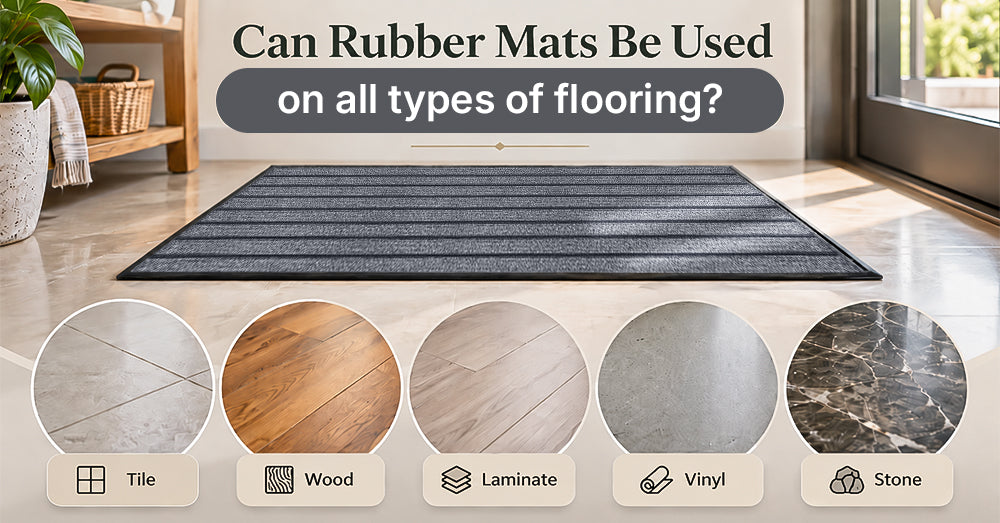
Rubber mats are a practical choice for many homes, garages, gyms, workshops and workplaces. They can add grip underfoot, protect the surface underneath, and help keep dirt and moisture under control. But if you're planning to buy a rubber mat, there is one question you should answer first: Can rubber mats be used on all types of flooring? The simple answer is no. Rubber mats suit many flooring surfaces, but they aren't automatically safe for every type of floor. Some rubber or latex-backed mats can stain or discolour certain surfaces, particularly vinyl, luxury vinyl tile (LVT) and some finished wood floors. The good news is that choosing the right mat is usually straightforward once you know what to look for. In this guide, we'll cover how rubber mats work with different flooring types, which surfaces need extra care, and how to avoid damage.
Are Rubber Mats Safe for Every Type of Floor?
Rubber mats are made for different purposes, so their construction can vary considerably. Some have solid rubber throughout, while others have a rubber, latex or PVC backing attached to another material. That backing is important. Certain materials can react with flooring finishes and leave behind marks or discolouration. The issue may not appear straight away either. A mat that looks fine after a few days could cause a problem after being left in the same position for several weeks or months. The safest approach is to check the flooring manufacturer's instructions before placing a rubber-backed mat on the surface. You should also check the mat's product description. A good supplier should clearly explain which flooring types the mat suits. If you're unsure, test the mat in a small, hidden area before using it across the room.
Can You Use Rubber Mats on Vinyl Flooring?

Vinyl flooring needs particular care when choosing a mat. Some rubber-backed and latex-backed mats can cause permanent staining or discolouration on vinyl. This is why flooring manufacturers often recommend using mats with a compatible backing.
The risk can apply to different types of vinyl flooring, including:
- Vinyl sheet flooring
- Luxury vinyl tiles
- Luxury vinyl planks
- PVC flooring
- Designer vinyl flooring
If you have vinyl flooring, don't choose a mat simply because it has a non-slip rubber backing. Instead, look for a product that is specifically described as suitable for vinyl. This is especially important if you've recently invested in a high-quality floor. Replacing a stained section of flooring can be far more expensive than choosing the right mat in the first place.
Can Rubber Mats Be Used on LVT?
LVT, or luxury vinyl tile, is one flooring type where you should check compatibility carefully. Some manufacturers advise against rubber-backed mats because they can permanently stain LVT surfaces. If you have LVT in your kitchen, hallway, living room or entrance, check the flooring manufacturer's care instructions before buying a rubber mat. A non-staining mat designed for LVT can be a better option. You should also avoid trapping moisture underneath the mat. This matters particularly in entrances where wet shoes and umbrellas can leave water on the floor.
Are Rubber Mats Suitable for Laminate Flooring?

Laminate flooring is designed to cope with everyday wear, but it still needs suitable floor protection. A rubber mat may suit some laminate floors, but check the manufacturer's recommendations first. Consider a few things. A mat can trap moisture underneath it, especially in areas near external doors. Grit and dirt can also collect underneath the mat. When the mat moves across the surface, this grit can scratch the floor. If you want to use a rubber mat on laminate flooring, choose a product that is clearly labelled as suitable for laminate. Keep the mat clean and lift it regularly to check the floor underneath. This is especially important in busy areas where people constantly walk over the mat.
Can Rubber Mats Be Used on Hardwood Floors?
Hardwood floors can look fantastic, but the finish needs protecting. Wood flooring may have a lacquered, oiled or other protective finish. Some rubber and latex-backed mats can react with these finishes and cause staining. For this reason, don't assume every rubber mat is safe for hardwood flooring.If you have solid wood or engineered wood flooring, check the manufacturer's recommendations before placing a rubber-backed mat on it. It's also worth thinking about where you're putting the mat. An entrance mat may collect rainwater, mud and grit from outside. If moisture stays trapped against the wood for long periods, it can cause problems even when the mat itself is otherwise suitable. Choose a mat designed for wood flooring, and keep both the mat and the floor underneath it clean and dry.
What About Engineered Wood Flooring?
Engineered wood flooring has a real timber surface, so many of the same considerations apply as with solid hardwood. The construction of the floor doesn't automatically make it compatible with rubber-backed mats. Check the flooring manufacturer's guidance, and pay attention to the surface finish.If you're unsure about a rubber mat, choose a product that specifically states it is suitable for engineered wood. Moving the mat occasionally also gives you a chance to inspect the floor underneath and remove any trapped dirt or moisture.
Can Rubber Mats Be Used on Concrete Floors?

Concrete is one of the more common surfaces for rubber mats. You'll often see rubber mats used on concrete floors in:
- Garages
- Workshops
- Sheds
- Home gyms
- Warehouses
- Commercial buildings
- Utility areas
Rubber mats can provide extra grip and create a protective barrier between the concrete and equipment, tools or machinery. They can also make a hard concrete surface more comfortable to stand on. However, one important consideration is moisture. If your concrete floor is damp, a rubber mat can restrict airflow and trap moisture underneath. Before laying a mat, make sure the surface is dry and suitable for covering. If the area is prone to dampness, lift the mat regularly and allow the floor to dry.
Are Rubber Mats Safe for Ceramic Tiles?

Ceramic tiles are generally suitable for mats, and rubber-backed products are commonly used on tiled floors. They can be particularly useful in areas where you need extra grip, such as kitchens, bathrooms and entrances. However, you should still check the condition and finish of the tiles. Dirt and grit can collect underneath a mat. If the mat shifts as people walk over it, trapped particles can scratch or mark some surfaces. Grout lines can also affect how securely the mat sits. For smooth tiled floors, choose a mat that stays flat and doesn't move around easily. And if your tiles have a specialist coating or delicate finish, check the manufacturer's care advice before using rubber.
Can You Put Rubber Mats on Porcelain Tiles?
Porcelain tiles are hard and durable, making them a popular choice for kitchens, bathrooms and hallways. You can often use a rubber mat on porcelain, but compatibility still depends on the specific mat and tile surface. For example, a highly polished porcelain floor may require different care from a textured or matt surface. Make sure the mat doesn't trap excessive moisture and clean underneath it regularly. If your porcelain tiles have a specialist treatment or sealant, follow the manufacturer's instructions.
Are Rubber Mats Suitable for Natural Stone Floors?

Natural stone requires more attention because different types of stone have different properties.
Common examples include:
- Slate
- Marble
- Limestone
- Travertine
- Sandstone
- Granite
Some stone floors are sealed to protect the surface, while others are more porous. A rubber mat may suit one stone surface but not another. Moisture can also become trapped under a mat, which may be an issue with certain stone types and finishes. If you have expensive natural stone flooring, check with the flooring manufacturer, supplier or installer before using a rubber-backed mat. It's better to confirm compatibility than risk damaging a costly floor.
Can Rubber Mats Be Used on Carpet?
You can use rubber backed mats on some carpeted surfaces, but you should still check the product specifications. The backing must be compatible with both the carpet and how the mat will be used. A heavy mat may flatten the carpet pile if it remains in the same place for a long time. A poorly designed mat may also move across the carpet and create an uneven surface. If you're buying a mat for carpet, look for one designed specifically for carpeted floors. Make sure it lies flat and doesn't create a trip hazard around the edges.
Why Can Rubber Mats Stain Flooring?
One of the main reasons people ask about rubber mats is the risk of staining. Certain rubber and latex materials contain compounds that can interact with particular flooring materials or finishes. This can lead to yellowing, dark marks or other forms of discolouration. The problem can be more noticeable when the mat stays in the same position for a long time. The mat's colour isn't enough to tell you whether it will stain. A black rubber mat isn't automatically unsuitable, and a light-coloured mat isn't automatically safe. The important thing is the material and backing. Always check the manufacturer's product information for flooring compatibility.
Do Rubber Mats Damage Vinyl Floors?
They can. Some rubber and latex-backed mats can cause permanent marks or discolouration on vinyl flooring.
If your floor is vinyl or LVT, look for a mat described as:
- Non-staining
- Vinyl safe
- LVT safe
- Suitable for vinyl flooring
- Suitable for luxury vinyl flooring
Don't rely on the phrase "non-slip" alone. A non-slip backing tells you about grip. It doesn't necessarily tell you whether the material is safe for your flooring.
Are Rubber Mats Suitable for Underfloor Heating?
If you have underfloor heating, consider both the flooring and the mat. A thick mat can reduce the amount of heat that reaches the room. Depending on its construction, it may also affect how heat moves through the floor. Your flooring manufacturer may also specify a maximum surface temperature. For example, some flooring products designed for use with underfloor heating have specific temperature limits.
Before using a rubber mat over underfloor heating, check:
- The flooring manufacturer's instructions.
- The mat manufacturer's recommendations.
- Any temperature limits for the flooring.
- Whether the mat is thick enough to restrict heat transfer.
This is particularly important if the mat will cover a large area.
How to Choose the Right Rubber Mat for Your Floor
Choosing the right rubber mat doesn't have to be complicated. Start with the floor, not the mat.
1. Identify your flooring
First, establish exactly what you have. Is it vinyl, LVT, laminate, hardwood, concrete, tile, stone or carpet? If you're not sure, check your flooring documents or contact the installer.
2. Check the backing
Turn the mat over. The backing material can be as important as the top material. Look for information about rubber, latex, PVC, fabric, foam or other backing materials.
3. Check flooring compatibility
Read the product description carefully. If the manufacturer says the mat is suitable for your floor, that's a much better indicator than assuming rubber is safe.
4. Think about moisture
Consider where you'll use the mat. An entrance mat will be exposed to wet shoes and rain. A kitchen mat may face spills. A garage mat may come into contact with water, oil or other substances. Choose a product designed for the environment.
5. Consider how long the mat will stay down
A mat that moves regularly has different requirements than one that stays in the same position for years. If you're covering a valuable floor, regular inspection underneath the mat is a sensible habit.
How to Protect Your Floor When Using a Rubber Mat
Even a suitable mat needs some basic care. Keep the mat clean. Dirt, grit and small stones can become trapped underneath and scratch the floor when the mat moves. Lift the mat regularly and clean the floor underneath. If the mat gets wet, let it dry properly rather than leaving moisture trapped underneath. You should also lift the mat when moving it. Dragging a heavy rubber mat across a hard floor can move dirt underneath it and cause scratches. If you're using a new mat on a valuable floor, test it in an inconspicuous area first if the manufacturer allows this.
Rubber Mat Flooring Compatibility Guide
|
Flooring |
General suitability |
What to consider |
|
Concrete |
Generally suitable |
Moisture and trapped dirt |
|
Ceramic tile |
Often suitable |
Surface finish and movement |
|
Porcelain tile |
Often suitable |
Finish and moisture |
|
Vinyl |
Check carefully |
Rubber backing can stain |
|
LVT |
Check carefully |
Follow manufacturer's guidance |
|
Laminate |
Product dependent |
Moisture and backing |
|
Hardwood |
Check carefully |
Rubber or latex may affect finish |
|
Engineered wood |
Check carefully |
Surface finish and manufacturer guidance |
|
Natural stone |
Check first |
Sealant, moisture and stone type |
|
Carpet |
Product dependent |
Backing and mat stability |
This is a general guide rather than a guarantee. Flooring manufacturers can have specific requirements for their products.
FAQs
Can rubber mats be used on all floors?
No. Rubber mats work well on many surfaces, but some rubber- or latex-backed mats can stain or damage certain flooring types. Always check compatibility before use.
Can rubber mats be used on LVT?
Check the LVT manufacturer's instructions before using a rubber-backed mat. Some LVT manufacturers advise against rubber-backed products because they can cause permanent staining.
Can rubber mats damage hardwood floors?
Some rubber and latex-backed mats can affect certain wood flooring finishes. Check the flooring manufacturer's recommendations before using one.
Are rubber mats safe for laminate?
Some are, but not all rubber mats are suitable. Choose a product specifically recommended for laminate flooring, and keep moisture and grit from getting trapped underneath.
Can I use a rubber mat on concrete?
Yes, rubber mats are commonly used on concrete floors in garages, gyms, workshops and other areas. Make sure the concrete is dry before covering it.
How do I stop a rubber mat from damaging my floor?
Use a mat that is compatible with your flooring, keep both surfaces clean and dry, and inspect underneath the mat regularly.
Is a non-slip mat the same as a non-staining mat?
No. "Non-slip" describes the mat's ability to stay in place. "Non-staining" refers to whether the mat is designed to avoid leaving marks or discolouration on a flooring surface.
Final Answer: Can Rubber Mats Be Used on All Types of Flooring?
Rubber mats can be a great choice for protecting floors and improving grip, but they aren't suitable for every flooring type. Concrete, ceramic tile and porcelain are often compatible with rubber mats, while vinyl, LVT, hardwood, engineered wood and some natural stone floors need more careful consideration. Before buying, check the mat's backing material and make sure it suits your flooring. If you have expensive flooring, follow the manufacturer's care instructions rather than relying on general advice. The right mat should protect your floor, not create another problem. If you're shopping for a rubber mat, start by identifying your flooring and the conditions the mat will face. From there, you can choose a product that provides the grip and protection you need without putting your floor at unnecessary risk.