Choosing the right bed sheets can make a significant difference to your sleep quality, comfort, and the overall appearance of your bedroom. However, with so many bedding options available, many UK shoppers find themselves asking the same questions: What is a deep fitted sheet? What is a flat sheet? Do I need both? And which option is best for my bed?
If you're shopping for new bedding, understanding the difference between deep fitted sheets and flat sheets can help you make the right choice. In this comprehensive guide, we'll explain how each sheet works, its benefits, and how to choose the best bedding for your mattress and sleeping preferences.
What Is a Deep Fitted Sheet?
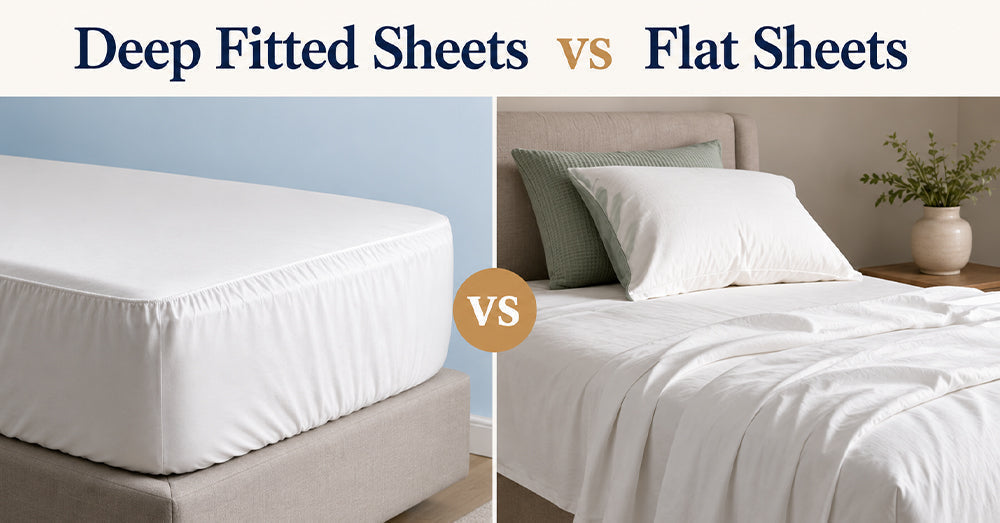
A deep fitted sheet is a type of bed sheet specifically designed to fit securely around a mattress. Unlike a standard fitted sheet, a deep fitted sheet has extra depth to accommodate thicker mattresses, mattress toppers, pillow-top mattresses, and mattress protectors.

The sheet features elasticated corners or fully elasticated edges that stretch beneath the mattress, creating a snug, secure fit. This prevents the sheet from slipping off during the night and helps keep your bed looking neat and tidy.
Deep fitted sheets have become increasingly popular in UK homes as modern mattresses are often much deeper than traditional designs. Many memory foam, hybrid, and luxury mattresses require extra-deep sheets to ensure proper coverage.
Benefits of Deep Fitted Sheets
- Stay securely in place throughout the night
- Provide a smooth sleeping surface
- Protect your mattress from dirt and wear
- Easy to fit and remove
- Suitable for deep mattresses and mattress toppers
- Create a neat and wrinkle-free appearance
For people who move frequently during sleep, extra deep fitted sheets are more practical because they are less likely to become untucked than flat sheets.
What Is a Flat Sheet?
A flat sheet, often referred to as a top sheet, is a rectangular piece of fabric placed between the sleeper and the duvet or blanket.

Unlike fitted sheets, flat sheets do not have elasticated edges. They are designed to lie flat across the mattress or over the sleeper and can be tucked under the mattress to create a clean and polished look.
Traditionally, flat sheets were a standard part of bedding sets throughout the UK and Europe. While some households still use them daily, others prefer to sleep directly under a duvet cover without a top sheet.
Benefits of Flat Sheets
Flat sheets offer several advantages, including:
Improved Bedding Hygiene
A flat sheet acts as a barrier between your body and your duvet cover. Since sheets are easier to wash than duvets, using a flat sheet can help keep bedding fresher for longer.
Temperature Regulation
Flat sheets are excellent for managing body temperature. During warmer months, you can sleep comfortably under a flat sheet without using a duvet. During colder months, the additional layer helps retain warmth.
Enhanced Comfort
Many people enjoy the soft, hotel-style feel that a flat sheet provides. Luxury hotels often use flat sheets because they create a more refined sleeping experience.
Decorative Appeal
Flat sheets can add elegance to a made bed. Folded neatly over a duvet, they contribute to a layered and luxurious bedroom aesthetic.
Deep Fitted Sheets vs Flat Sheets: Key Differences

Although both products are bed sheets, they serve different purposes.
|
Feature |
Deep Fitted Sheet |
Flat Sheet |
|
Purpose |
Covers the mattress |
Covers the sleeper |
|
Elastic Edges |
Yes |
No |
|
Mattress Protection |
Excellent |
Limited |
|
Temperature Control |
Moderate |
Excellent |
|
Ease of Use |
Very easy |
Requires tucking |
|
Appearance |
Smooth mattress finish |
Layered luxury look |
|
Suitable for Deep Mattresses |
Yes |
Yes |
The primary role of a deep fitted sheet is to protect the mattress and provide a comfortable sleeping surface. In contrast, a flat sheet functions as an additional bedding layer that improves comfort and hygiene.
Do You Need Both a Deep Fitted Sheet and a Flat Sheet?
Many people wonder whether they need both types of sheets.
The answer depends largely on personal preference.
If you prefer simplicity, a deep fitted sheet combined with a duvet cover may be sufficient. This is the most common bedding arrangement in modern UK households.
However, if you value hotel-style luxury, improved hygiene, and greater flexibility for temperature control, using both a fitted sheet and a flat sheet can be highly beneficial.
Many bedding experts recommend the following layering system:
- Mattress
- Mattress protector
- Deep fitted sheet
- Flat sheet
- Duvet or blanket
This arrangement provides maximum comfort while helping to keep bedding cleaner.
Deep Fitted Sheets vs Standard Fitted Sheets
Another common question among shoppers is whether they need a standard or deep fitted sheet.
The main difference is mattress depth.
Standard Fitted Sheets
Standard fitted sheets are designed for mattresses with a depth of approximately 20-30cm.
Deep Fitted Sheets
Deep fitted sheets are generally designed for mattresses measuring 30cm to 40cm deep.
Extra Deep Fitted Sheets
Extra deep fitted sheets can accommodate mattresses exceeding 40cm in depth and are often used with mattress toppers and luxury mattresses.
If your fitted sheet constantly slips off the corners of your mattress, it's often a sign that you need a deeper fitted sheet.
How to Choose the Right Deep Fitted Sheet
Selecting the correct deep fitted sheet involves more than simply choosing your mattress size.
Measure Your Mattress Depth
Before purchasing, measure your mattress from top to bottom. Include any mattress toppers or protectors you use regularly.
This measurement will help you select a sheet with sufficient depth.
Choose the Correct Bed Size
Common UK bed sizes include:
- Single: 90cm x 190cm
- Double: 135cm x 190cm
- King Size: 150cm x 200cm
- Super King: 180cm x 200cm
Always verify both mattress dimensions and depth before ordering.
Look for Strong Elastic
High-quality fitted sheets feature durable elastic around the entire perimeter rather than just the corners. This ensures a tighter fit and greater longevity.
What Material Is Best for Bed Sheets?
The material you choose can significantly impact comfort and durability.
Cotton
Cotton remains one of the most popular bedding fabrics in the UK.
Benefits include:
- Breathability
- Softness
- Durability
- Easy maintenance
- Excellent moisture absorption
Egyptian cotton and long-staple cotton varieties are particularly sought after for their luxurious feel.
Linen
Linen bedding is becoming increasingly popular due to its natural temperature-regulating properties.
Advantages include:
- Highly breathable
- Durable
- Naturally moisture-wicking
- Suitable for all seasons
While linen typically costs more than cotton, many people find it worth the investment.
Cotton Percale
Percale sheets offer a crisp, cool finish that many sleepers associate with luxury hotel bedding.
Cotton Sateen
Sateen sheets have a silky feel and subtle sheen, making them ideal for those seeking a more luxurious sleeping experience.
Avoid Low-Quality Synthetic Fabrics
Synthetic bedding can trap heat and moisture, potentially leading to discomfort during sleep. While some blended fabrics perform well, natural fibres generally provide better breathability.
Does Thread Count Matter?
Thread count is often used as a measure of sheet quality, but higher isn't always better.
For most sleepers:
- 200–300 thread count offers excellent everyday comfort.
- 300–500 thread count provides a softer, more luxurious feel.
- A thread count above 500 may not always result in noticeably better quality.
The quality of the cotton itself is usually more important than thread count alone.
Best Colours for Bed Sheets
When selecting bedding colours, consider both practicality and bedroom design.
White Sheets
White remains the most popular choice due to its clean, timeless appearance. It also complements virtually every décor style.
Cream and Ivory
Neutral tones create a warm and elegant atmosphere while maintaining versatility.
Grey and Charcoal
Modern and sophisticated, grey bedding remains a favourite in contemporary UK homes.
Bold Colours
Navy, forest green, and deep burgundy can add personality to a bedroom. When purchasing coloured bedding, buying matching sets helps ensure colour consistency.
Can You Use a Flat Sheet Instead of a Fitted Sheet?
Yes, a flat sheet can be used as a bottom sheet if necessary.
To do so:
- Place the flat sheet evenly across the mattress.
- Leave equal overhang on each side.
- Tuck the bottom edge underneath the mattress.
- Create neat hospital corners at each corner.
- Tuck the remaining sides securely underneath.
Although this method works, fitted sheets are generally easier and more convenient for everyday use.
FAQs
Are Deep Fitted Sheets Better?
Deep fitted sheets are better for thicker mattresses because they stay securely in place and provide full mattress coverage.
Do Hotels Use Flat Sheets?
Yes. Many luxury hotels use flat sheets between guests and duvets to improve hygiene and create a premium sleeping experience.
How Deep Should a Deep Fitted Sheet Be?
A deep fitted sheet should be slightly deeper than your mattress measurement to ensure a secure fit.
Can I Use a Deep Fitted Sheet on a Normal Mattress?
Yes. However, if the sheet is significantly deeper than the mattress, it may not fit as tightly as intended.
Final Thoughts
Understanding the difference between deep fitted sheets and flat sheets can help you create a more comfortable and stylish sleeping environment. Deep fitted sheets provide a secure fit and essential mattress protection, while flat sheets add an extra layer of comfort, hygiene, and temperature control.
For most UK households, a deep fitted sheet is considered an essential bedding item. Whether you also choose to use a flat sheet depends on your personal preferences and sleeping habits. By selecting the correct size, depth, material, and quality, you'll enjoy a better night's sleep and bedding that lasts for years.